Prof. Zhao Chun from Xi’an Jiaotong-Liverpool University (XJTLU) in SIP is leading a team to turn theories in top journals into real-world products, aiming to tackle challenges in computing power and energy consumption in the era of AI by replacing electricity with light.
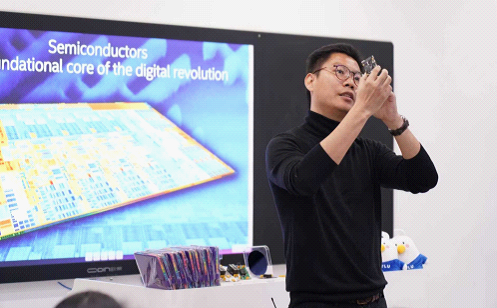
At HOTCHIP MEMS Sensor, the first XJTLU-incubated startup led by a professor from the university, Zhao and his team work hard on micro-ring resonators (MRRs) which are compact, dielectric waveguide structures that guide light around a closed circular path. Their aim is to enable faster, lower-power and more integrated data transmission between chips. Beyond this, they build optical computing architectures directly on chips, allowing data to be processed during transmission.
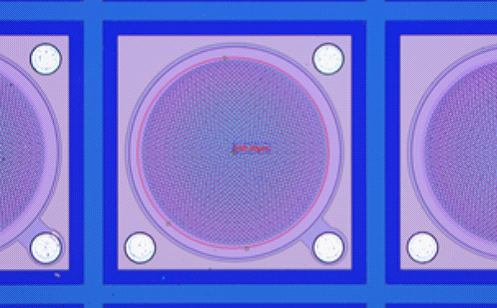
The team also develops related software and algorithms. With strong capability of vertical integration of multiple elements from materials to applications, they became the world’s first team to apply micro-ring technology to optical computing, offering low-power solutions for AI data centers and securing a leading role in next-generation optical computing chips.
XJTLU has given full support to the startup, covering patent application, intellectual property management, and entrepreneurship approval. Notably, the school holds a 5.5% stake in the company.
September 14, 2026